

-
4x4 Safari Land Cruiser/ Local Zanzibar Boat
-
3 Stars Hotels
-
Zanzibar
-
December – March
-
Safari game drive and Zanzibar Holidays
-
All meals during the trek
-
English, Spanish, French, Chinese
-
Easy to Moderate
-
2-200
-
1
-
95
Overview
Plan a honeymoon Tanzania tour and start your married life with majestic wild animals of Africa.
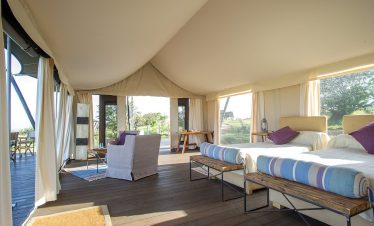
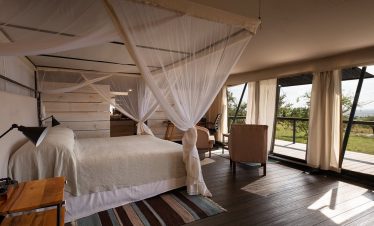
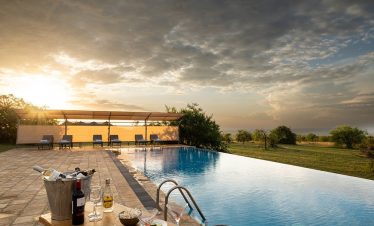
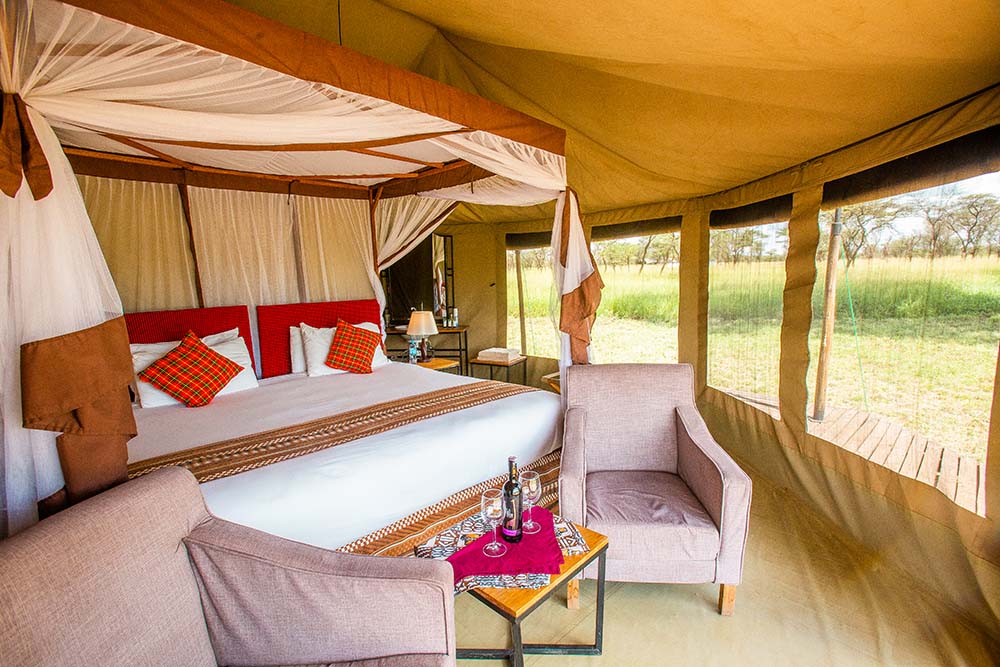
The country offers a perfect setting for honeymooners with a combination of amazing experiences in the wild, Mountain trekking and beautiful beaches, in the process you will get the chance to enjoy your honeymoon tour in Tanzanian way and stay in a romantic luxurious accommodation.
We’ve done a lot of honeymoon safaris so we have an idea what you might like.
- Arrival
- Day 1: Arusha – Tarangire National Park
- Day 2: Marera valley lodge – Southern Serengeti /Ndutu Area
- Day 3: Southern Serengeti /Ndutu Area
- Day 4: Southern Serengeti /Ndutu Area – Ngorongoro Crater
- Day 5: Arusha – Zanzibar (Stone Town & Prison Island)
- Day 6: Dolphin & Spice Tour
- Day 7: Nungwi Village, Natural Aquarium & Sun Set Cruise
- End
Itinerary
Picked up at Kilimanjaro International Airport and transferred to a hotel in Arusha, where you will meet with a Safari driver guide for the Safari briefing and then rest until the next morning.
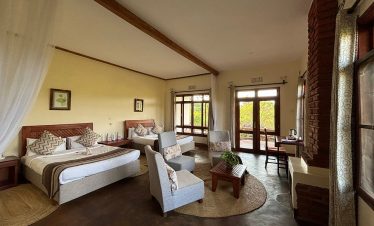
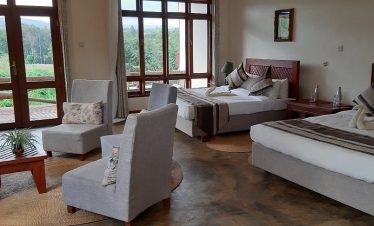
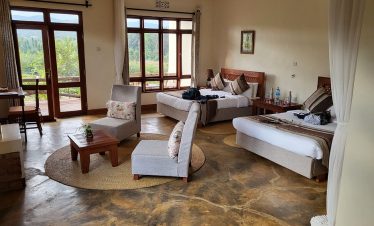
Accommodation: MasaiLand Lodge (or similar to that)
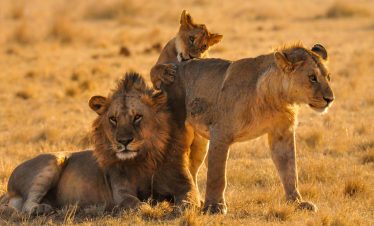
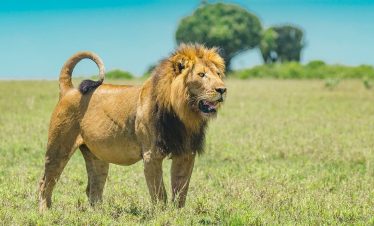
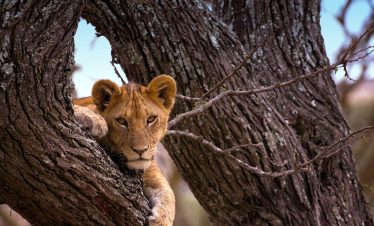
The tour to Tarangire National Park begins after breakfast at the hotel. Tarangire has immense concentrations of game in the peak months and a fraction of the visitors that go to any of the other northern parks. The game viewing here from July through to October is superb and the atmosphere and habitat are completely different from the other parks. The real prizes in the park are dwarf mongoose, Oryx and generuk, but viewings are very rare. Tarangire is one of Tanzania’s finest birding destinations.
After an extensive game drive, you will leave the park and drive to Marera Valley Lodge for dinner and overnight.
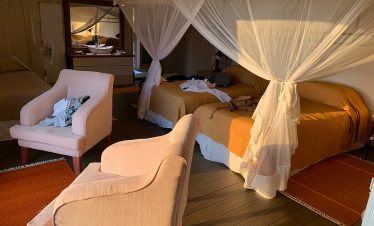
Accommodation: Marera Valley Lodge (or similar to that)
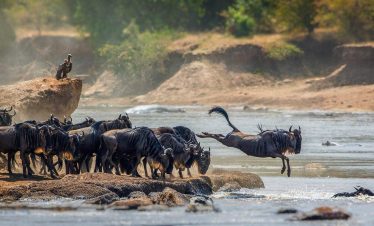
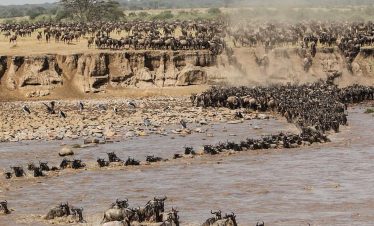
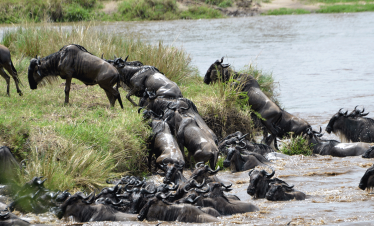
After breakfast, start the drive to the Lake Ndutu region, situated in the Ngorongoro Conservation Area, a sublime landscape of the southern Serengeti ecosystem. The drive takes approximately 3 hours, taking you across the beautiful landscape of the Rift Valley. Like most of the other Rift Valley, alkaline lakes, Ndutu is frequently inhabited by a wide array of wildlife. With appetites sated, undertake a game drive in the Ndutu region. The majority of the wildebeest migration can normally be found on the short-grass plains from December to April. After the late afternoon game drive, you will drive to the Lake Ndutu tented lodge for dinner and overnight.
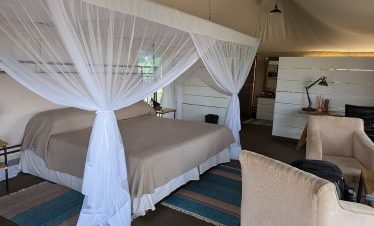
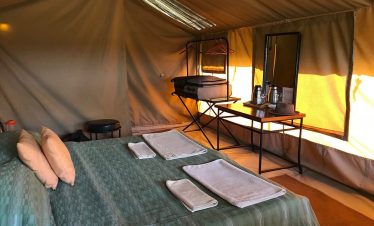
Accommodation: Narudi Tented Lodge (or similar to that)
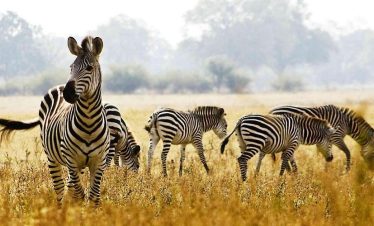
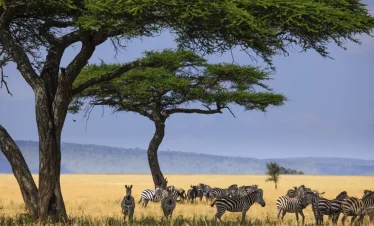
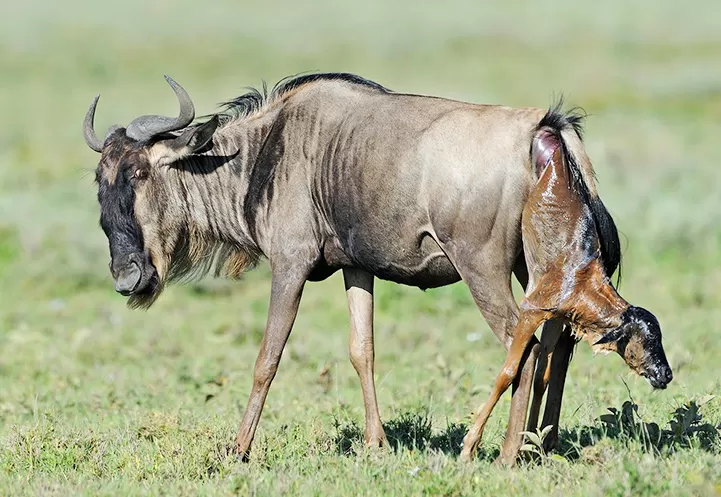
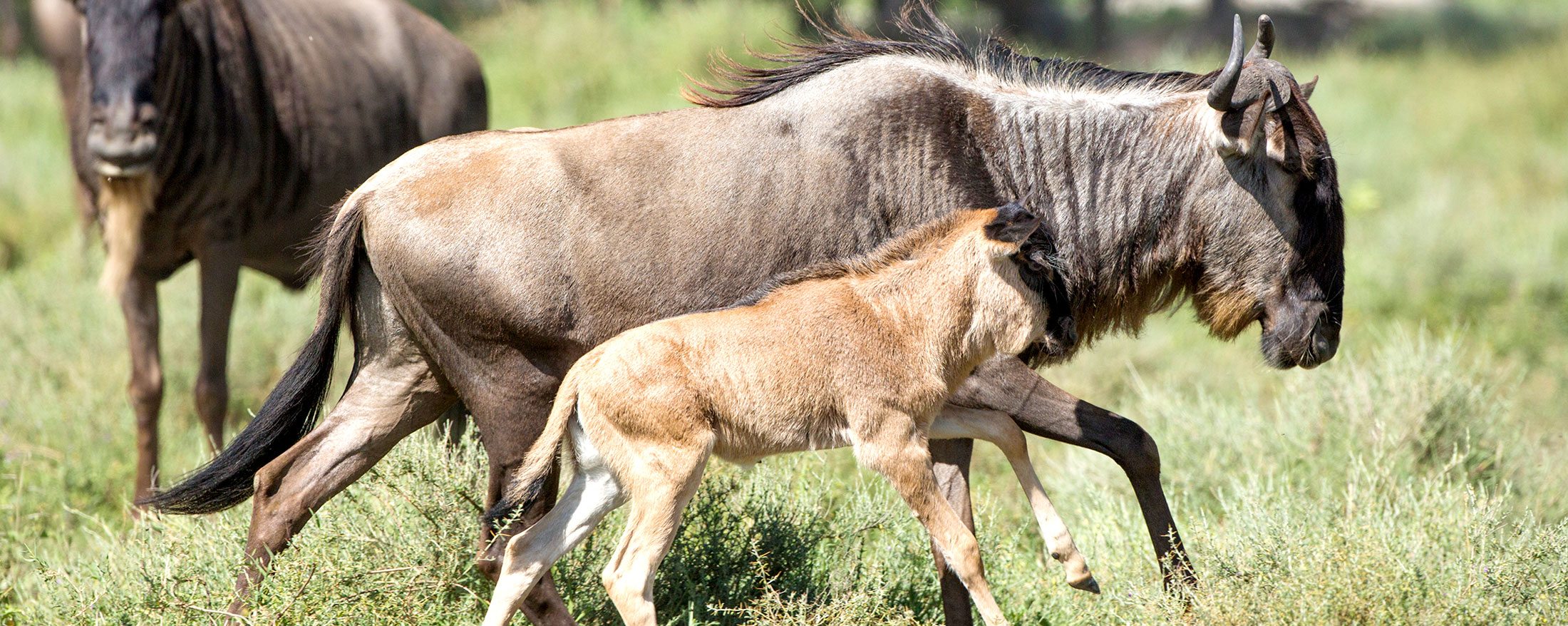
On this day, you will spend a full day game driving in the Ndutu region. Endeavor to explore the range of different habitats found here that include swamps, woodland, soda lakes, and the world-famous Serengeti short grass plains. You will see the awesome sight of the great thronging herds of wildebeest and zebra. During a short time frame around January, normally lasting about 3 weeks, the majority of the wildebeest calves drop in the region of half a million young in this awesome act of synchronized birthing. The sea of grass provides little cover and the young Wildebeest calves can run minutes after they are born and within 3 days they are normally strong enough to keep up with the herd. Depart to Ang’ata Migration tented lodge for the accommodation for dinner and overnight later in the afternoon.
Accommodation: Narudi Tented Lodge (or similar to that)
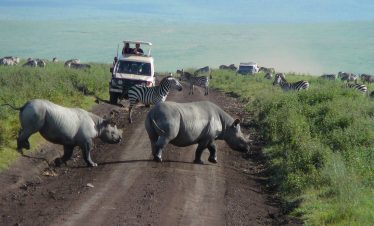
After breakfast, drive from the Southern Serengeti (Ndutu) to the Ngorongoro Crater. The Crater was created when a large volcano exploded and collapsed in on itself two to three million years ago. The drive down into the Crater is an adventure in itself, and when you reach the Crater floor, you will quickly find yourself amongst large numbers of wildebeest, zebra, gazelle, and more than 500 bird species. The Crater provides you with the best chance of seeing the endangered black rhino, which can sometimes be spotted in the open grasslands. After a full afternoon inside the Crater, you will head to the Marera Valley lodge for dinner and an overnight.
Drive back to Arusha.
Accommodation: Rhino Lodge (or similar to that)
In the morning depending on your flight departure to Zanzibar our driver will drop at Arusha airport.On your arrival the same day you will visit stone town, world heritage site to explore the history and culture of Zanzibar, the tour includes a visit to former slave market site, it is now Anglican church built in 1870, Local market for fish, spices and vegetables, House of Wonder (Beit-Al-Ajab) is a national museum but closed for renovation, see also Old Arab Fort, Palace Museum, Old Indian dispensary (cultural center).
As you walk around the narrow streets, you will experience many cultural activities, architectures including well curved doors.
Later take the boat to prison island to see Aldabra land giant tortoise, brought in Zanzibar from Seychelles and see also prison building which was used as quarantine station in 1893. Overnight at Stone Town Area.
Accommodation: Tembo Hotel (or similar to that)
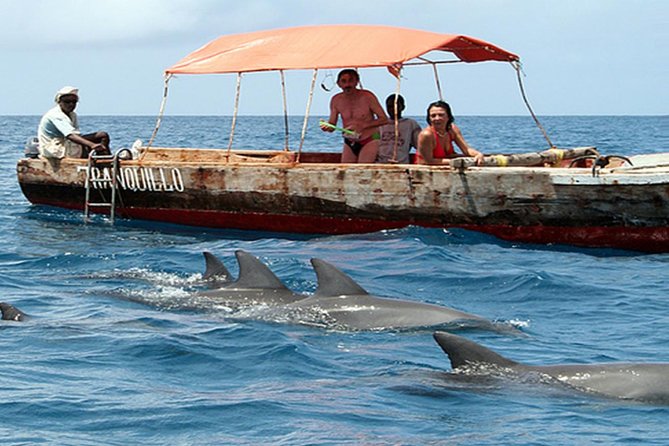
Early in the morning drive to south coast at Kizimkazi for dolphin tour. Take a boat to watch dolphins, you may swim with bottle – nose dolphins which are friendly.
After dolphin activity we will visit spice farm to see how spices and some tropical fruits grow, you get chance to smell and even taste some spices clove, lemongrass, nutmeg, cinnamon, turmeric, vanilla, coconuts, papaya, chili, black pepper, jackfruit, cardamom, cassava and oranges. You see also (Mr. Butterfly), the coconut climber while singing then you will taste young coconut. This day you will overnight at Nungwi area.
Accommodation: DoubleTree Resort by Hilton Zanzibar – Nungwi (or similar to that)
In the afternoon Visit the fishing village of Nungwi, walk in the village to experience boat (dhow) fabrication and also economic and cultural activities.
Then go to the natural aquarium to see the turtles, there is an option to swim with turtles.
Later, transfer to Kendwa, the most beautiful beach of the island and most animated place, after walking around; take the dhow for sun set cruise (tropical fruits and soft drinks included) Later transfer back to hotel.
Accommodation: DoubleTree Resort by Hilton Zanzibar – Nungwi (or similar to that)
Cost
The Cost Includes
- Park fees (for non-residents)
- All activities (unless labelled as optional)
- All accommodation as stated in the itinerary
- A professional driver/guide
- All transportation (unless labelled as optional)
- All Taxes / VAT
- Roundtrip airport transfer
- All Meals (as specified in the day-by-day section)
- Drinking water on all days
The Cost Excludes
- Tanzania Visa: $50 per person on arrival, USA and CANADA passport holder USD 100
- International flights (from/to home)
- Additional accommodation before and at the end of the tour
- Tips (tipping guideline US$10.00 pp per day)
- Personal items (souvenirs, travel insurance, visa fees, etc.)
- Government imposed increase of taxes and/or park fees.
- Alcohol drinks
- International flights (from/to home)
Frequently Asked Questions (FAQs)
- The group size is between five and a maximum of ten persons
- On a private climb, you choose your hiking partners. You will not be teamed up with strangers. We can accommodate private groups of up to 200 or so.
As per the national park authorities, the minimum age for climbing Kilimanjaro is 10 years but seeing that children are more prone to altitude sickness than adults, we recommend a minimum age of 12. There is no maximum age restriction, but a medical check-up is advisable for people over the age of 65.
Kilimanjaro is one of the few mountains of its height that can be summited without mountaineering skills or experience. You should however be healthy and fit enough to manage the 4-6 hour hike each day, as well as the 12-14 hour hike on the day of the summit. For the last stretch, much endurance and willpower is needed.
Generally yes. We however discourage any attempts during the main rainy season (end of March to beginning of June). During the short rainy season (November), daily short rainfalls and cloudy views can be expected. From December until the end of February, temperatures are at their highest and rainfall is at its minimum. These are the busiest times. Between the end of June and the middle of October is also a good time to climb. Temperatures are a little lower but there is almost no rain.
The Lemosho Route is widely considered to be the best and most scenic route on Kilimanjaro. The route features all the benefits, offerings, and success ratio of the Machame route by starting a little further round to the west. It leads you over the spectacular Shira Plateau and avoids the clumsiness of the early parts of the Machame route at the same time.
The route approaches Mount Kilimanjaro from the west, beginning with a long drive from Moshi to Lemosho Gate. From there, the first two days are spent trekking through the rainforest to Shira Ridge, before crossing the Shira Plateau. The route then heads cross the famed Shira plateau and see the beautiful Shira Cathedral before reaching the Shira Camp on day three.
The descend is via the Mweka route, where you will most likely encounter other trekkers who ascended via the Shira, Umbwe, or Machame routes.
If you have both time and enough budget, consider taking the 8 days Lemosho route, which is certainly one of the most enjoyable ways to do Kilimanjaro.
The seven days of the Lemosho route are split into two easier days and offer a better success rate. Experienced and already acclimatized mountaineers may opt for the more difficult 7-day ascent along this route.
Overnight accommodation will be in two-man tents and sleeping mats are provided. Single travellers usually share a tent with another group member of the same gender. Single tents can be provided on request at additional cost.
There are no ablution facilities except for basic long-drops (very simple latrines), but on private climbs mobile chemical toilets are included.
- Fresh water will be collected from the available sources on the mountain and is boiled before it’s served. Porters will carry water in canisters for the higher areas, where no more fresh water is available. All meals are freshly prepared by your cook.
- Meals are included as indicated in the itinerary.
- Breakfast usually consists of fruit, scrambled eggs, porridge, toast and jam, hot chocolate, coffee or tea. For lunch you are usually provided with a lunch box that contains sandwiches, boiled eggs, chicken etc.
- For dinner you will be served a soup and bread followed by the main course that either consists of red meat or poultry served with some sort of starch (chips, mashed potatoes, pasta or rice) and vegetables. For dessert you will get fresh fruit, hot chocolate, coffee or tea and milk.
- Breakfast and dinner are served in a mess tent that is equipped with a table and chairs while lunch is usually enjoyed en-route.
- We are able to provide meals for vegetarians or people with other dietary requirements or food allergies but we need to know in advance in order to cater for special requests.
Almost every hiker attempting Kilimanjaro will notice the altitude and the thinner air. Fitness fanatics are just as likely to suffer from it as couch potatoes. Symptoms include headaches that are often accompanied by fatigue, loss of appetite and nausea. More often than not, symptoms are mild, allowing you to continue to ascend. Occasionally the symptoms are more severe and a rapid descent is required, after which your body tends to recover quite quickly. Please however always keep in mind, that severe altitude sickness can be life-threatening and it may even lead to death. We do not recommend the use of medication, as it suppresses the symptoms of altitude sickness. We do however encourage you to drink enough water to replace the fluids lost from the physical activity. Two to four litres per day are recommended, as well as mineral supplements (magnesium etc.) to help replace lost minerals and to prevent muscle cramps.
- Unfortunately there are no state of the art mountain rescue services like the ones to be found in the European Alps for example. If you no longer have the ability to walk, you will either be carried or transported on a wheeled stretcher. This is by no means a pleasant experience which is why we encourage you not to overstrain your body and to travel safe. Helicopters can only land at a lower altitude and are therefore rarely used.
- Please ensure that you are covered by your health insurance while travelling. If you do not have sufficient coverage, we highly recommend taking out appropriate travel insurance. Your insurance should cover all your medical expenses including costs for rescue and repatriation.
- It is common practice to tip the members of your mountain crew after the climb. Tips make up a large portion of their income and are therefore highly appreciated. Below are some guidelines based on a group (not per person)
- Guide: 15-18 USD / day
- Assistant Guide: 12-15 USD / day
- Cook: 8-10 USD / day
- Waiter: 7-9 USD / day
- Porter: 6-7 USD / day
- Of course the above is just a guideline. If you are happy with the service received, you are welcome to show this when it comes to tipping.
- If you plan to tip in USD, please make sure the notes have been printed after 2004 as any earlier dated bank notes are not valid and can therefore not be used in Tanzania.
- Travel bag, backpack or kitbag, weighing no more than 12kg. Please do not bring a suitcase or trolley bag, as this type of luggage cannot be carried by the porters.
- Day backpack with rain protection.
- High quality sleeping bag for harsh conditions (at night temperatures can drop to -20°C).
- Different layers of clothing including thermal base layers, fleece clothing, trekking pants, warm jacket and water-resistant top layers as well as a warm headgear.
- Water-resistant and comfortable hiking boots and a variety of trekking socks.
- Please note that the above list is not complete and these are just a few things that you will have to bring with you. Once we have confirmed your booking, you will receive a more detailed list.
- Citizens of all nationalities need to contact the embassies of their travel destination to check the visa regulations.
- In general, European citizens can apply for a Tanzanian Tourism Visa upon arrival in Tanzania.
- It is the sole responsibility of every traveller to be in possession of the required documents and visa that allows them to enter their holiday destination.
- Tanzania is no longer a yellow fever region, so a yellow fever certificate isn’t generally a requirement. If visiting any other countries in the region either before or after Tanzania, be sure to check if a yellow fever vaccination is required
- Although there are no mosquitoes at high altitude, Tanzania is within a malaria region. It is up to you if you wish to take medication, but we suggest that you speak to your doctor or travel clinic about the different prophylaxis and their effects and side-effects.
- Although Tanzania does not require proof of immunization against tetanus, diphtheria, polio and hepatitis A and B, we nevertheless recommend those vaccinations.